



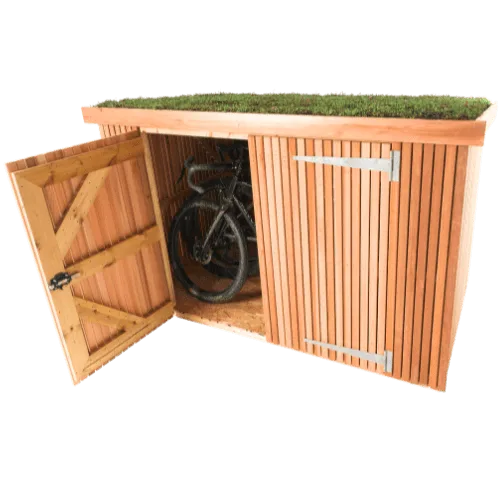
Once you’ve chosen the right bike shed for your space, the next step is preparing a solid, level base for it to sit on. A well-built base keeps the shed stable, protects your bikes from damp and movement, and helps the shed perform properly for years to come.
This guide outlines the most suitable base types, how to choose between them, and what to avoid.
Choosing the Right Shed Base Material
Wherever you place your bike shed, the surface must be level, solid, and able to withstand wet weather without becoming soft or uneven. A good base prevents movement, keeps the structure square, and makes installation straightforward.
Our sheds can be installed on four main types of base: a level concrete slab, an existing paved area, an eco-base, or a decked base.
Concrete Slab
A concrete slab is the most durable option and is suitable for all of our sheds, especially our Vertical Bike Sheds.
- The slab should match the footprint of the shed (width × depth).
- It must be 100 mm thick and fully level.
- This option provides long-term stability and performs well in all weather conditions.
Existing Paving
Many customers already have a paved area in place, particularly in front gardens. In most cases, this is suitable for installation.
- A slight slope for drainage is usually acceptable.
- If paving only covers part of the shed footprint, it should be extended so the entire base sits on a solid surface.
- Works well for Classic Sheds and units installed in small front gardens.
Eco-Base
Eco-bases are lightweight grids filled with shingle. They are suitable for Classic Sheds and Slot-In Sheds.
- Lay the grid on sharp sand over a well-compacted, level sub-base around 100 mm deep.
- The grid should be firm and level before filling.
- Ideally, the finished base should sit around 25 mm above ground level to aid drainage.
Decked Base
A decked platform is a useful solution for sloping or uneven sites.
- The frame must be completely level.
- The joists on the deck should run side to side to sit perpendicular to the shed’s front-to-back joists, for better structural support.
- For guidance on suitable decking construction, feel free to contact us.
Decking works particularly well when ground conditions make concrete difficult or when you prefer a raised installation.
Bike Shed Base Types to Avoid
Some surfaces do not provide adequate support for a bike shed. We recommend avoiding:
- Grass
- Soil
- Loose gravel
- Astro turf
- Old or uneven decking
- Uneven or mixed surfaces
- Paving with significant gaps or irregularities
These surfaces can shift, sink, or become unstable in wet weather and can compromise the shed’s alignment and longevity.
If your garden currently has one of these surface types, replacing it with one of the approved base options is advisable.
Do the Sheds Come With a Floor?
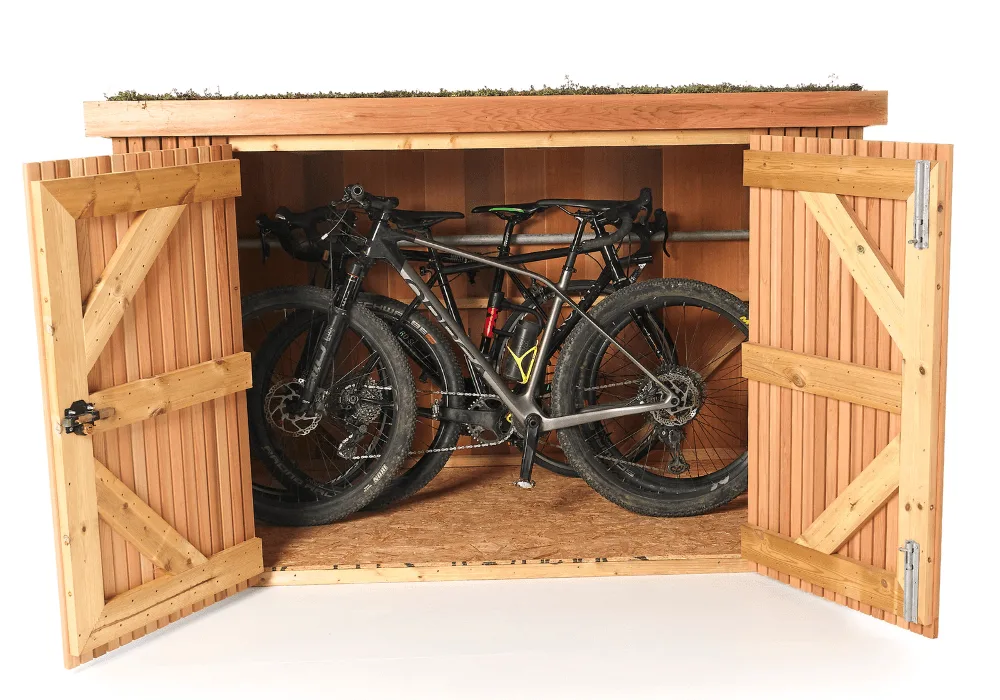
Yes. All Brighton Bike Sheds include a sturdy timber floor supported by adjustable rubber pads. These pads can be adjusted by 1–3 cm to ensure the floor is stable and level during installation.
However, they are not designed to replace a proper base, and a solid foundation is still required.
How Much Space Do I Need for a Shed Base?
It’s important to check that you have enough space for both the shed and its base. Your base should match the shed footprint exactly and should not extend beyond it. For concrete bases, aim for a thickness of around 100 mm.
If you are unsure about the footprint required for your chosen shed, our team can provide exact measurements.
Find the Right Bike Shed for You
Brighton Bike Sheds offers a range of high-quality timber and steel bike sheds, including Vertical and Slot-In designs, corten steel options, and sheds suitable for up to six bikes. Whether you need compact storage or a larger solution for multiple bicycles, you can find a shed that suits your space and requirements.
Explore our range of bike sheds or get in touch with our team for advice on choosing the right base or model for your space.