



Choosing a bike shed means balancing security, weather protection, and space efficiency. The right shed protects bikes from theft and the elements while fitting your garden layout and budget. This guide covers materials, sizing, security features, and placement to help you make an informed decision.
Why You Need a Bike Shed
Leaving bikes exposed outdoors shortens their lifespan and increases theft risk. Rain rusts chains and gears. UV light degrades tyres and saddles. Opportunist thieves target unsecured bikes in front gardens and alleyways.
A purpose-built bike shed addresses all three problems. Weatherproof cladding and roof overhangs keep water out. Lockable doors and internal anchor points deter theft. Compact designs fit narrow side passages and small urban gardens where full-size sheds cannot.
Mass-produced garden sheds are rarely suitable for bikes. Standard depths leave handlebars jutting out. Generic door widths make manoeuvring bikes difficult. Purpose-built bike sheds are dimensioned around actual bike measurements, not arbitrary storage boxes.
Types of Bike Sheds Available
Wooden Bike Sheds

Wooden sheds suit residential gardens. FSC-certified timber like Scottish Larch and Red Cedar resists rot naturally without chemical treatment. Timber cladding can be stained or painted to match fencing and outbuildings.
Maintenance requirements are moderate. Timber needs re-treating every 3 to 5 years depending on exposure. Timber cladding with roof overhangs prevents water ingress on exposed sites tongue-and-groove joints, providing the best protection.
Brighton Bike Sheds manufactures wooden sheds using vertical cladding nailed in three rows. This prevents crowbar access and water penetration. The Classic Bike Shed range uses this construction method across all sizes.
Metal Bike Sheds
Metal sheds offer lower maintenance and higher physical security. Galvanised steel resists rust without re-treatment. Welded seams and riveted panels withstand forced entry better than timber.
The trade-off is aesthetics. Metal sheds suit industrial or modern gardens but clash with traditional landscaping. Condensation can form inside metal structures unless ventilation is adequate.
Brighton Bike Sheds offers Corten steel cladding alongside traditional timber options. The Corten Steel Bike Shed provides maximum security through weathering steel construction that develops a distinctive red-rust patina over time, combining durability with contemporary aesthetics whilst remaining highly theft-resistant.
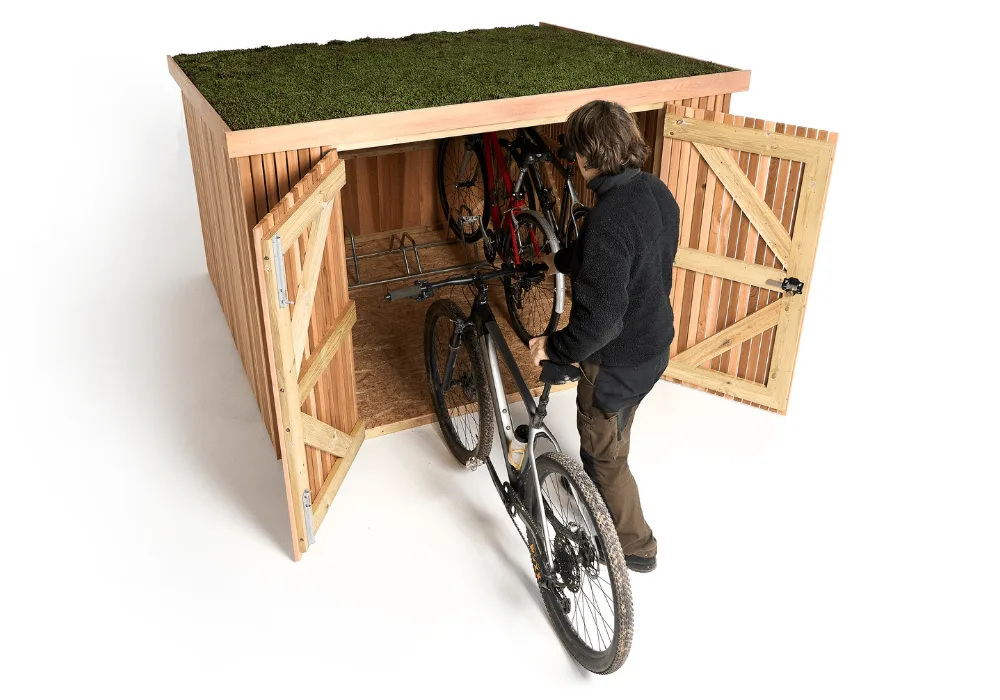
What Size Bike Shed Do You Need?
Shed capacity depends on bike type, handlebar width, and access requirements. Standard adult bikes need roughly 60cm width per bike when stored side by side. Children’s bikes require 40 to 50cm. E-bikes and cargo bikes need 70 to 80cm.
Depth matters more than width. Bikes stored rolled in need 180 to 200cm internal depth. Vertical storage reduces this to 130cm but requires wall-mounted racks or hooks. The Vertical Bike Shed range uses hanging systems to maximise space efficiency in narrow gardens.
Allow clearance around the shed. You need at least 80cm in front of the doors to open them fully and wheel bikes out. Side clearance of 10 to 15cm prevents water pooling against the structure and provides access for maintenance.
Sizing Guide
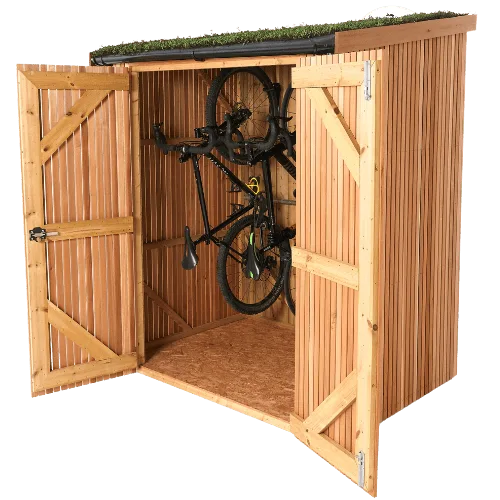
1 to 2 bikes: 80-100cm wide, 130cm deep (vertical storage) or 200cm deep Slot-in
3 to 4 bikes: 140cm – 180cm wide, 130cm deep Vertical and 200cm deep Slot-in
5 to 6 bikes: 220cm – 260cm wide, 130cm deep Vertical and 200cm deep Slot-in
Mixed family bikes (adult + children): Add 40cm width per child’s bike, 60cm per adult bike
If your bikes include cargo models or wide-handlebar mountain bikes, the Cargo Bike Shed accommodates extended frames and bulky accessories without forcing awkward angles.
Key Features to Consider
Security Features
Lockable doors are baseline. High-security features include one-way security screws on hinges (cannot be removed from outside), hardened steel bolts, and internal anchor bars for D-locks.
A SecureBar is a thick-walled galvanised steel tube fixed to the interior back wall. Bikes lock to it with chains or D-locks. Removing it requires power tools, which creates noise and draws attention. This internal anchor is more effective than external ground anchors, which can be dug up.
Metal mesh panels behind wooden doors add a second layer. An angle grinder is needed to cut through galvanised steel mesh. Most opportunist thieves move on when faced with two separate security barriers.
Some sheds offer optional alarms. Movement-activated alarms with remote key fobs alert you to tampering. These work best in gardens visible from the house, where you can respond quickly.
Weather Resistance
Roof design affects water ingress. Flat roofs pool water. Pitched roofs with minimum 10-degree slopes shed rainwater away from the structure. Felt or rubber roofing membranes prevent leaks. Living green roofs provide natural insulation and drainage while supporting biodiversity.
Ventilation prevents condensation. Small vents near the roof ridge allow air circulation without compromising security. Bikes stored in unventilated sheds develop surface rust even if the shed itself stays dry.
Timber preservative extends lifespan. FSC-certified timber resists rot naturally, but additional treatment every 3 to 5 years maintains weather resistance. Avoid creosote-based products, which are now restricted under UK regulations.
Ease of Access
Door configuration matters for daily use. Hinged double doors open wider than single doors, making it easier to manoeuvre bikes in and out. Doors that open outwards (not inwards) maximise internal space.
Door height should clear handlebars. Standard bike shed doors are 120 to 180cm tall. Plus Height options accommodate bikes with tall handlebars or roof-mounted accessories.
Internal layout affects usability. Fixed bike racks organise bikes but reduce flexibility. Open interiors let you reconfigure as your bike collection changes. If you are unsure about rack systems, read this guide on how to hang your bike in a shed.
Installation and Assembly
Flat-pack sheds arrive in panels for self-assembly. Assembly typically takes 4 to 6 hours with two people. Instructions vary in quality. Some manufacturers provide video guides, others supply basic diagrams.
Professional installation is available in some regions. Brighton Bike Sheds offers delivery and installation across Brighton, Sussex, London, and parts of the South East. Installation costs £359 and includes full assembly and setup. Current lead time varies but is often 8 to 12 weeks from ordering.
Base preparation is critical. Sheds need level, stable foundations. Paving slabs, concrete, or compacted gravel work. Grass and soil do not. Unlevel bases cause doors to stick and cladding to warp.
Where to Place Your Bike Shed
Garden positioning balances accessibility and security. Placing the shed near the house deters theft but may not fit with garden layout. Tucked-away locations are less visible but harder to reach daily.
Side passages suit narrow sheds. Measure the passage width before ordering. Standard shed depths start at 80cm, but custom widths accommodate tighter spaces. Vertical storage sheds work well in passages around 200cm wide.
Boundary placement requires checking local rules. Sheds within 2 metres of a boundary have height restrictions. Buildings over 2.5 metres tall need planning permission in some cases. See the planning permission section below for detail.
Avoid low-lying areas. Water pools in dips and hollows. Even weatherproof sheds suffer if standing in water for extended periods. Raise the base slightly if drainage is poor.
Sunlight exposure affects timber. South-facing sheds experience more UV degradation and require more frequent treatment. North-facing sheds stay damp longer after rain. East or west orientations balance these factors.
Planning Permission in the UK
Most bike sheds do not need planning permission under permitted development rights. Outbuildings are allowed if they meet specific criteria.
General Rules
Height: Maximum 2.5 metres for sheds within 2 metres of a boundary. Maximum 4 metres for pitched roofs or 3 metres for other roofs if further from the boundary.
Coverage: Outbuildings cannot cover more than 50% of your garden (excluding the original house footprint).
Position: Sheds should not extend beyond the front wall of the original house. Side or rear gardens are permitted.
Use: The shed must be for domestic storage, not a separate living space or business premises.
Exceptions
Listed buildings and conservation areas have stricter rules. Check with your local planning authority before ordering.
If your property is leasehold, check your lease. Some freeholders restrict outbuildings regardless of planning law.
For detailed guidance on placement and compliance, see this article on how big should a bike shed be, which covers UK-specific regulations.
Best Bike Shed Options by Use Case
Best for Small Gardens
Families need space for mixed bike sizes. Adult bikes, children’s bikes, cargo bikes, and trailers require flexible interiors.
Larger sheds in the Classic Bike Shed range accommodate 4 to 6 bikes with room for helmets, pumps, and maintenance tools. Adjustable shelving and hooks let you reconfigure as children grow and bike sizes change.
If you also need space for bins or garden tools, explore options with integrated bin storage or browse the other sheds range for multi-purpose designs.
Most Secure Option
High-security sheds combine multiple barriers. Heavy-duty galvanised hinges with one-way security screws prevent removal. Hardened steel long-throw bolts resist cutting. Internal SecureBars anchor bikes with D-locks or chains.
Optional upgrades include galvanised steel mesh panels behind doors and movement-activated alarms. These additions raise the difficulty level for thieves to the point where they move on to easier targets.
All Brighton Bike Sheds include three-layer security as standard: reinforced hinges, steel bolts, and internal anchor bars. Additional security features are available at the time of purchase.
Best Value Option
Value comes from longevity, not initial price. Cheap sheds fail within 2 to 3 years. Poor-quality timber rots. Flimsy locks break. Thin cladding warps.
Purpose-built sheds using FSC-certified timber last 15 to 20 years with moderate maintenance. Nailed construction (not tongue-and-groove) prevents water penetration and forced entry. Galvanised hardware resists rust.
The Classic Bike Shed balances upfront cost with long-term durability. Prices start from £1,353 depending on size and configuration. Installation is available from £359
Common Mistakes to Avoid
Buying Too Small
Underestimating space needs is common. Bikes take more room than expected once helmets, locks, pumps, and bags are factored in. Children’s bikes grow into adult bikes. E-bikes replace standard bikes.
Oversize slightly rather than undersize. An extra 30cm width costs less upfront than replacing the entire shed in 2 years.
Ignoring Security
Cheap sheds with basic locks invite theft. Bikes worth hundreds or thousands of pounds deserve equivalent protection. Internal anchor points and reinforced doors are not optional extras if you live in an area with any theft risk.
Check your home insurance policy. Many insurers require bikes to be locked inside a secure structure. A flimsy shed with a basic padlock may not meet the policy definition of “secure”.
Poor Placement
Placing sheds in dips or against north-facing walls creates damp problems. Water pools around the base. Lack of sunlight prevents drying. Mould and rot develop faster.
Survey your garden in wet weather before deciding placement. Where does water collect? Avoid those areas.
Skipping Base Preparation
Setting a shed directly on grass or soil leads to rot and subsidence. Timber bases absorb moisture. Unlevel ground causes structural problems.
Invest in a proper base. Paving slabs on compacted hardcore work for smaller sheds. Concrete pads suit larger structures.
The base can extend up to 5cm beyond the shed footprint on all sides, but we recommend a base that is equal to the shed footprint to avoid creating a rain trap around the perimeter. It is important to allow a clearance strip of 10cm at the rear of the base if the shed is going up against a boundary wall or fence.
Final Thoughts
Choosing a bike shed starts with understanding your priorities: security, space, budget, and aesthetics. No single shed fits every situation. Families need flexible interiors. Urban gardens need compact footprints. High-theft areas need maximum security.
Purpose-built bike sheds outperform mass-produced alternatives. They are dimensioned for bikes, not generic storage. They include security features that deter theft. They use materials that resist weather for 20 years plus, not 3 to 5.
If you are ready to explore options, browse the full range of bike sheds or visit the shop to compare models. For questions about sizing, security, or installation in your area, contact Brighton Bike Sheds directly.
Frequently Asked Questions
FSC-certified timber offers the best balance of durability, aesthetics, and weather resistance for most residential gardens. Metal sheds suit high-security or industrial contexts. Avoid untreated softwoods and thin plastic sheds.
Purpose-built bike sheds with reinforced hinges, steel bolts, and internal anchor bars are significantly more secure than standard garden sheds or no protection at all. Security levels vary by manufacturer. Look for one-way security screws, hardened steel components, and SecureBars as minimum features.
Most bike sheds do not need planning permission if they are under 2.5 metres tall (within 2 metres of a boundary) or under 4 metres tall (further from boundaries), and cover less than 50% of your garden. Listed buildings and conservation areas have stricter rules. Check with your local planning authority if uncertain.
Well-constructed wooden sheds using FSC-certified timber and proper roof design last 15 to 20 years with re-treatment every 3 to 5 years. Cheap sheds using untreated softwood fail within 2 to 5 years.
Yes. Vertical storage sheds reduce depth to 130cm while storing 1 to 6 bikes. Narrow widths accommodate side passages and tight urban spaces. Custom sizing is available from some manufacturers.
Essential features include lockable doors with hardened steel bolts, one-way security screws on hinges, and internal anchor bars (SecureBars) for locking bikes with D-locks or chains. Optional upgrades include galvanised mesh panels and alarms.