



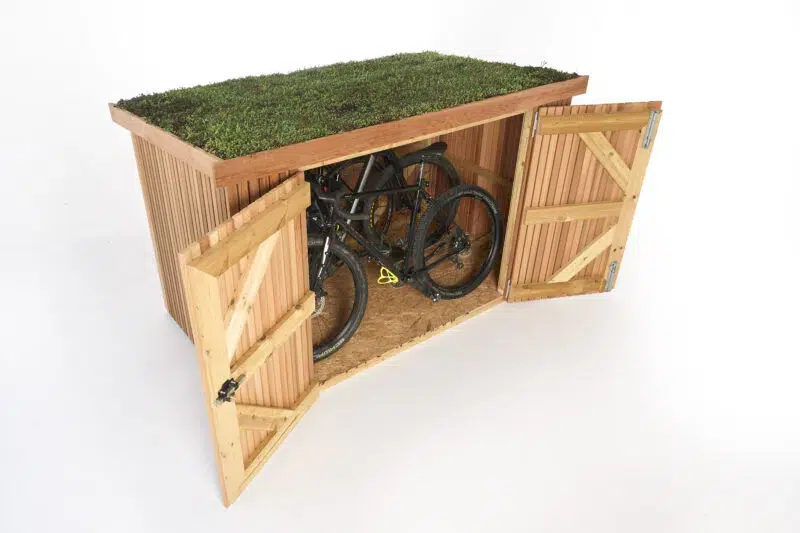
Wood is the better choice for most UK homeowners. FSC-certified timber bike sheds last 15 to 20 years, need less specialist maintenance than metal, and store bikes without the condensation risk galvanised steel carries. Metal, Corten steel and plastic all have genuine advantages for specific situations, and we compare all four below.
Quick Material Comparison
| Material | Security | Durability | Maintenance | Best For |
|---|---|---|---|---|
| FSC Timber | Strong (SecureBar system) | 15–20+ years | Re-treatment every 3–5 years | Traditional gardens, customisation, balanced performance |
| Galvanised Metal | Very Strong | 15–20 years (coating intact) | Minimal (rust checks) | Zero-maintenance priority, hidden placement |
| Corten Steel | Very Strong | 20+ years | Minimal (no treatment) | Contemporary gardens, coastal climates |
| Plastic | Moderate | 5–10 years | Minimal | Temporary storage only |
This table provides a quick reference. Read on for a detailed breakdown of each material.
Wooden Bike Sheds
Timber is the most popular bike shed material in the UK. Quality wooden sheds combine natural aesthetics with proven durability when built using FSC-certified timber and proper construction.
Advantages
- Natural garden integration. Timber blends into UK gardens and suits traditional period properties, conservation areas, and contemporary settings alike. Paint or stain to any colour to match your scheme.
- Customisation flexibility. Timber construction allows modifications throughout the shed’s lifespan: internal shelving, door positions, hooks, and extensions. Metal units resist alteration once manufactured.
- Natural moisture regulation. Timber breathes naturally, regulating interior humidity without producing condensation. This protects bike components from the dripping moisture that single-skin metal sheds generate.
- Sustainability. We use FSC-certified Scottish Larch and Red Cedar, timbers that resist rot without chemical treatment and carry responsibly managed, traceable supply chains. Browse our full range of FSC-certified wooden bike sheds.
- Security through construction. Our wooden sheds use vertical nailed cladding fixed in three rows, a SecureBar internal anchor system for D-lock attachment inside the shed, one-way security screws, and galvanised steel hinges and drop bolts.
Disadvantages
- Maintenance commitment. Wooden sheds need re-treatment every 3 to 5 years using wood oils or preservatives, approximately 6 hours and £50 to £100 in materials. This protects the investment but requires planning.
- Rot risk if neglected. Untreated or cheap softwood deteriorates quickly. FSC-certified timber with proper treatment eliminates this concern.
- Higher initial cost. Quality wooden sheds range from £500 to £3,000. Lifespan, customisation, and moisture performance typically justify the difference over a 10-year ownership period.
Galvanised Metal Bike Sheds
Galvanised steel appeals to buyers prioritising security and minimal maintenance. The practical trade-offs are significant and should be understood before purchase.
Advantages
- Hard material security. Steel panels resist cutting tools better than standard timber, which matters in high-theft areas where material hardness drives the decision.
- Low maintenance. Cleaning and rust spot checks average 2 hours annually. No treatment required.
- Fire resistance. Non-combustible construction meets requirements on some properties or caravan sites.
Disadvantages
- Condensation. Metal heats quickly in sunlight then cools rapidly after sunset, causing moisture to condense on interior surfaces and drip onto stored bikes. Chains, gears, and cassettes develop surface rust even though the shed keeps rain out. Ventilation reduces but does not eliminate this.
- Noise. Thin metal panels amplify rainfall into intrusive drumming. This is a material characteristic, not a build quality issue.
- Rust after coating damage. Once galvanised or powder-coated steel scratches, rust spreads quickly in UK damp climate. Expect visible deterioration within 5 to 10 years of coating failure.
- Industrial aesthetic. Metal sheds carry a stark appearance unsuited to most residential gardens, with no option to paint or stain.
- Wide quality gap. Premium brands cost £800 to £2,000 plus and deliver genuine structural security. Budget options at £300 to £600 use thin panels that offer minimal advantage over reinforced wooden equivalents whilst carrying all the condensation and noise drawbacks.
Plastic Bike Sheds
Plastic resin sheds suit temporary storage or tight budgets, not permanent bike security. Thin walls provide minimal theft resistance, panels crack under impact, and UV degradation causes brittleness within 5 to 10 years. Quality wooden or metal sheds cost more upfront but last two to three times longer.
Corten Steel Bike Sheds
Corten weathering steel forms a protective rust-like patina within 5 to 12 months of outdoor exposure. Unlike thin galvanised panels, it is structural-grade material that hardens over time rather than degrading.
Advantages
- Structural strength. Corten exceeds the material specification of thin galvanised panels, providing superior resistance to forced entry.
- Self-protecting patina. The oxide layer eliminates painting or treatment. Scratches and surface knocks blend into the developing finish rather than exposing bare metal.
- Contemporary aesthetic. The weathered rust finish suits modern garden design without the stark industrial appearance of galvanised steel.
- Coastal performance. The protective layer reforms naturally after scratches, unlike galvanised coatings that fail after damage. Well suited to properties within 5 miles of coastline.
- Reduced condensation. We install Corten cladding over an OSB backing layer, which moderates temperature swings and reduces condensation compared to single-skin metal panels.
Disadvantages
- Higher upfront cost. Corten sheds range from £2,000 to £4,000. Longevity and zero maintenance justify the investment for the right buyer, but the initial outlay is significant.
- Patina runoff period. Rust runoff during the first 5 to 12 months can stain surrounding paving or decking. A gravel channel around the base mitigates this.
- Styling constraints. The weathered rust finish does not suit traditional cottage gardens or conservation areas.
Head-to-Head: The Key Decision Factors
Security
Premium galvanised metal and Corten steel edge ahead on raw material hardness. However, our wooden sheds combine SecureBar internal anchor points, one-way security screws, galvanised hinges and drop bolts, and three-row vertical nailed cladding to deliver protection adequate for most UK residential contexts. The security gap matters primarily in extreme high-theft situations. For a full breakdown of security features, see our complete guide to choosing a bike shed.
Durability
Quality products across each category reach similar lifespans. FSC-certified timber lasts 15 to 20 plus years with re-treatment. Galvanised steel matches this if the coating remains intact. Corten steel outlasts both in a maintenance-free context, hardening over time rather than degrading. Budget options in any material typically fail within 5 to 10 years.
Maintenance
Metal and Corten require the least ongoing effort. Galvanised steel averages 2 hours annually. Corten needs occasional cleaning only. Wooden sheds require approximately 6 hours of treatment every 3 to 5 years plus an annual inspection. For buyers with limited time or physical limitations, metal and Corten hold a clear advantage here.
Aesthetics
Timber suits most UK residential gardens through natural appearance and full paint or stain flexibility. Corten works well in contemporary settings. Galvanised metal rarely enhances garden appearance and works best in hidden placement where function outweighs looks.
Moisture Management
Timber handles UK climate best. It breathes naturally, regulating interior humidity without producing condensation. Galvanised metal creates persistent moisture problems affecting bike components. Corten over OSB performs better than single-skin metal but cannot match timber’s natural breathability.
Total Cost of Ownership Over 10 Years
| Material | 10-Year Estimate | Breakdown |
|---|---|---|
| Galvanised Metal | ~£1,100 | £1,000 purchase + £100 maintenance |
| FSC Timber | ~£1,800 | £1,500 purchase + £300 treatment |
| Corten Steel | ~£3,050 | £3,000 purchase + £50 maintenance |
Quality wooden sheds deliver the best value for most buyers when factoring lifespan, flexibility, and aesthetics. Cheap options in any material prove a false economy.
Which Material Should You Choose?
Choose wooden if you want natural garden aesthetics, customisation flexibility, or FSC sustainability credentials, and can commit to re-treatment every 3 to 5 years. The Classic Bike Shed and Slot-In Bike Shed cover the full range of garden sizes and bike capacities. The Vertical Bike Shed is worth considering for narrow passages or space-constrained gardens.
Choose galvanised metal if security is the absolute priority, garden placement is hidden or industrial, and you accept managing condensation through ventilation and regular bike maintenance. The budget must allow for premium brands delivering genuine structural security.
Choose Corten steel if you want structural-grade security without industrial appearance, contemporary garden design suits the weathered aesthetic, or coastal durability is a requirement. Our Corten Steel Bike Shed stores up to 6 bikes with an optional green roof.
Frequently Asked Questions
Corten steel performs best within 5 miles of coastline or in areas with persistent damp exposure. The self-protecting patina resists salt spray and reforms naturally after surface damage, unlike galvanised coating that fails once scratched.
FSC-certified timber also handles damp conditions well when properly maintained. Red Cedar and Scottish Larch naturally resist rot, and re-treatment every 3 to 5 years sustains protection. Good drainage and airflow around the base prevent water pooling that accelerates decay.
Galvanised metal sheds struggle near the coast. Salt exposure accelerates coating failure, and once the protective layer scratches, rust spreads rapidly in persistent damp.
Wooden sheds offer the most flexibility. Paint or stain to any colour, add internal shelving and hooks, or extend the structure as needs evolve. All of this is achievable with basic tools throughout the shed's lifespan. We offer bespoke sizing and door configurations on our wooden bike sheds beyond our standard range.
Metal sheds resist customisation. Welded construction prevents structural changes, standard finishes cannot be repainted, and drilling through panels for internal fixtures introduces rust risk. Corten steel faces the same limitations internally, and its patina colour cannot be altered.
Quality wooden sheds using FSC-certified timber last 15 to 20 plus years with re-treatment every 3 to 5 years. Cheap untreated softwood fails within 2 to 5 years. Lifespan depends on timber quality and maintenance consistency.
Re-treatment takes approximately 6 hours every 3 to 5 years and costs £50 to £100 in materials. Properly maintained wooden sheds routinely exceed 20 years of service.
Plastic resin sheds are not suitable for permanent bike storage. Thin walls offer minimal security against theft, panels crack under impact, and UV degradation causes brittleness within 5 to 10 years. The short lifespan makes them false economy compared to quality wooden or metal alternatives lasting 15 to 20 plus years.
Browse our FSC-certified wooden bike sheds or the Corten Steel Bike Shed, or return to our complete guide to choosing a bike shed for further guidance on sizing, placement, and security.