



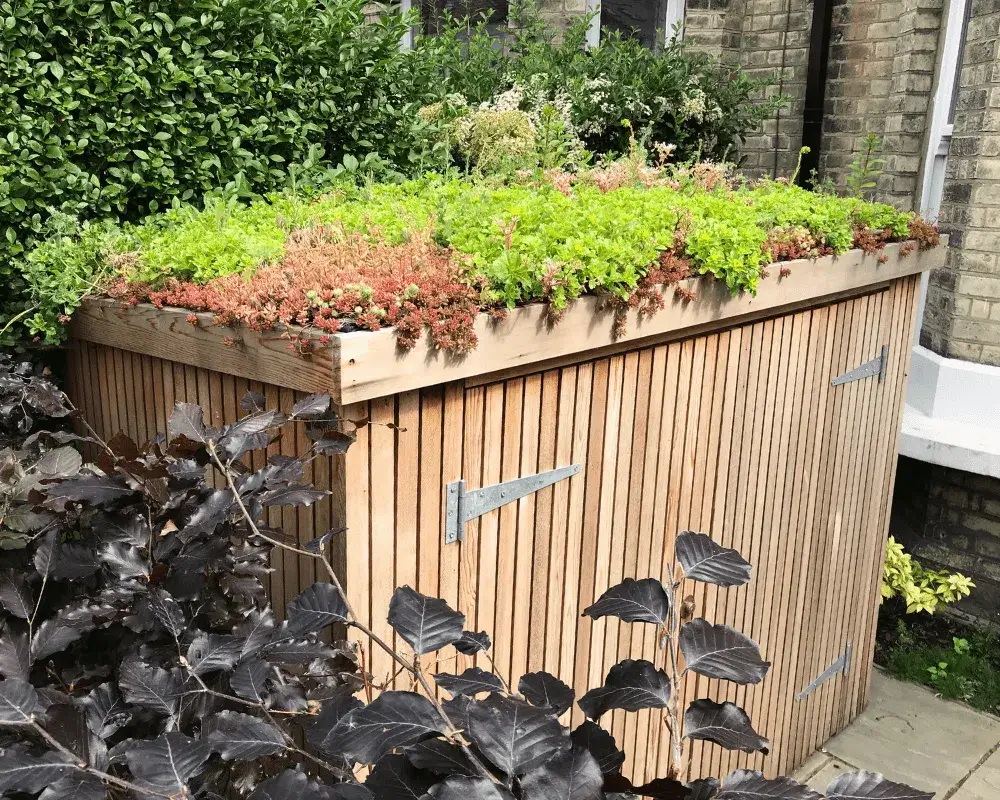
For outdoor timber structures in the UK, both Scottish larch and western red cedar perform well without treatment. Cedar has the edge on raw durability and is the higher-quality timber of the two. Scottish larch costs less, is grown domestically, and carries a lower embodied carbon footprint. For a bike shed in a British garden, both are sound choices. The decision comes down to budget and sustainability priorities.
What is Scottish larch?
“Scottish larch” refers to larch grown in Scottish plantations rather than a distinct botanical species. The trees are most commonly European larch (Larix decidua) or Japanese larch (Larix kaempferi), both of which have been planted extensively across Scottish uplands since the 18th century. The term is a commercial designation for provenance, not species.
Larch is unusual among conifers in being deciduous. It sheds its needles in autumn, which influences how it grows: the annual growth rings are tight and dense, producing a timber with a high resin content and natural tannins that contribute to outdoor durability. Scottish larch is classified as Class 3 to Class 4 under the EN 350 standard, meaning moderately durable to slightly durable for above-ground outdoor use. In practice, correct detailing (no ground contact, good ventilation, adequate roof overhang) moves its real-world performance toward the upper end of that range.
What is western red cedar?
Western red cedar (Thuja plicata) is worth naming in full because “red cedar” is used loosely to describe several unrelated species. Eastern red cedar (Juniperus virginiana) is a different timber with different properties, and the two are not interchangeable. The western red cedar used for exterior cladding in the UK is predominantly sourced from British Columbia in Canada.
Cedar’s reputation for outdoor performance comes from its naturally occurring thujaplicins: fungicidal compounds that inhibit decay without any applied treatment. It is also resin-free, which gives it exceptional dimensional stability and makes it highly receptive to paint or stain when a surface finish is wanted. Imported Canadian western red cedar is classified as Class 2 under EN 350 (durable), placing it a step above larch in the durability hierarchy.
How they compare outdoors
Natural durability
Cedar holds a clear advantage untreated. Its Class 2 rating reflects the protective effect of thujaplicins on the heartwood, whereas Scottish larch at Class 3-4 relies more heavily on its resin content and construction detailing to achieve comparable longevity. The gap narrows considerably when larch is correctly specified and installed, but cedar starts from a stronger baseline.
UK climate performance
Both timbers handle British weather well. Larch performs reliably through the wet-dry cycling typical of a UK garden, and its high resin content provides consistent protection as the wood weathers. Cedar can be prone to surface checking (fine surface cracks along the grain) in variable conditions where rapid moisture fluctuation occurs, though this is largely cosmetic and does not affect structural integrity.
Dimensional stability
Cedar is notably stable: it resists cupping, twisting, and warping more readily than most softwoods, including larch. Larch is denser and holds fixings more firmly, which is an advantage in a structure subject to regular access and loading. Neither characteristic is decisive in a well-built bike shed, but both are worth understanding.
Weathering
Left untreated, both timbers silver to a grey patina over one to two seasons. Larch silvers unevenly at first as the natural oils work to the surface; cedar weathers more uniformly. Both can be treated with an exterior oil to slow the silvering and maintain the warmer tones of new timber, or left to age naturally without any structural penalty.
The sustainability case for Scottish larch
The strongest argument for Scottish larch over western red cedar is provenance. Canadian cedar travels thousands of miles to reach a UK workshop. Scottish larch is grown domestically, which substantially reduces the transport component of its embodied carbon. For a timber being marketed partly on sustainability grounds, that difference is material.
Scottish larch is also available through FSC-certified supply chains. Brighton Bike Sheds sources from FSC-certified suppliers who hold chain of custody certification, meaning the timber can be traced back through a verified supply chain to responsibly managed forests. Cedar can also be FSC-certified, and responsible sourcing matters regardless of species. But the transport distance differential remains, and domestic supply chains are generally more transparent and less exposed to the logging practices that have attracted scrutiny in parts of British Columbia.
Larch also grows quickly in UK conditions. Rotation cycles of 30 to 40 years mean the supply can be replenished within a working lifetime, and actively managed larch plantations sequester carbon throughout that cycle. The case for domestic softwoods as a sustainable building material is well established, and Scottish larch is among the most practical options available to UK manufacturers.
Maintenance and lifespan
Both timbers benefit from the same basic principles of good construction: no ground contact, adequate ventilation beneath the floor structure, a roof overhang that keeps driving rain off the cladding face, and fixings in stainless or galvanised steel to prevent staining. These details matter more than species choice in determining how long a cladding installation lasts.
Left untreated and correctly detailed, western red cedar has a well-established track record for exterior above-ground use. Scottish larch performs reliably in the same conditions, though its lower durability classification means correct detailing is less forgiving. If a treated finish is wanted, both timbers accept exterior oils and stains well. Cedar, being resin-free, takes a surface finish slightly more evenly.
Why Brighton Bike Sheds uses Scottish larch
Scottish larch is the standard cladding across the Brighton Bike Sheds timber bike shed range because it meets the criteria that matter for a UK garden structure: natural durability without treatment, domestic sourcing, FSC-certified supply, and a weathered appearance that improves with age. Western red cedar is offered as a premium upgrade for customers who want cedar’s superior durability rating or its distinctive warm colour. The choice between them is a genuine trade-off, and both are supported options across the range.
If sustainability is the primary consideration alongside durability, the eco-friendly bike shed guide covers the broader picture of how material selection, roof choice, and construction detailing interact.
If you are still deciding between timber and a different material altogether, our wooden vs metal bike sheds comparison covers security, maintenance and cost side by side.
Frequently Asked Questions
A well-maintained Scottish larch or red cedar bike shed lasts 15 to 20 years. Both timbers resist rot naturally, so lifespan comes down to drainage, ventilation and re-oiling rather than the wood itself failing.
No. Scottish larch can be used untreated above ground in a well-detailed structure. Its natural resin content provides baseline protection against decay without any applied preservative. Treatment with an exterior clear oil every two to three years will slow the natural silvering and extend the appearance of new timber, but it is optional rather than necessary for the timber's structural performance.
For a UK project, yes, primarily on transport grounds. Scottish larch is grown domestically and travels a short distance to the workshop. Western red cedar is predominantly imported from Canada, adding a significant transport component to its embodied carbon. Both species are available with FSC certification, but the provenance advantage of domestic larch is difficult to offset.
Western red cedar commands a notable premium over Scottish larch. As a slow-grown timber from a cold climate, cedar produces denser, more consistently knot-free boards that take longer to reach harvestable size. Scottish larch grows faster in UK conditions and is available in greater domestic volume, which keeps costs lower. For a bike shed, the price difference between the two cladding options is real but not prohibitive; the decision is whether cedar's durability and stability advantages justify the additional cost for your situation.
Cedar weathers more uniformly. Its even grain structure and low resin content mean the silvering process is consistent across the board face. Larch silvers less evenly at first as its natural oils migrate to the surface, and the grain pattern becomes more pronounced as it ages. Both settle into a similar silver-grey tone over time, but cedar reaches that state more predictably.
Both timbers are available as cladding options across the Brighton Bike Sheds range. To compare finishes and discuss which suits your garden and budget, take a look at the Classic Bike Shed or how to choose a bike shed for guidance on the wider decisions involved.